


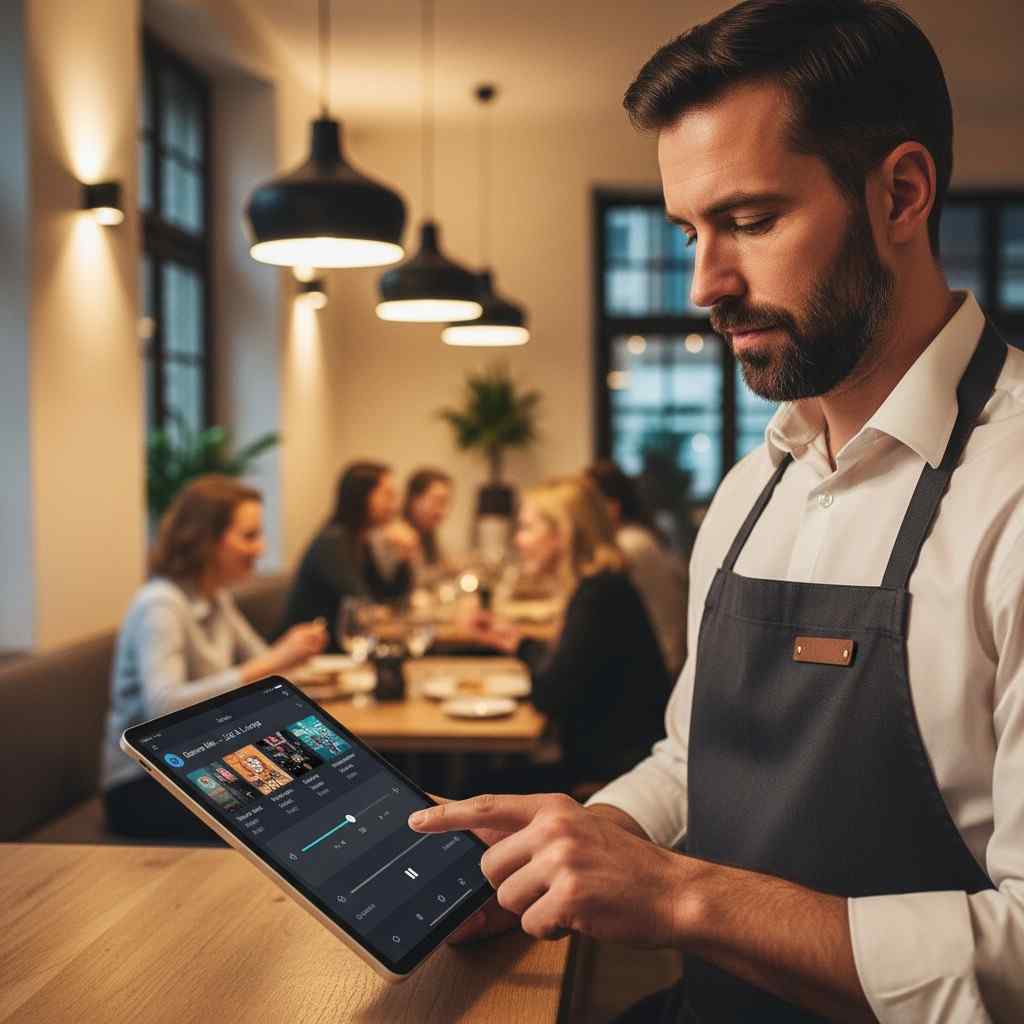
Choosing the right background music for a restaurant is a business decision, not a personal preference. Music affects customer mood, dining speed, spending behavior, and overall experience. Research from hospitality and consumer behavior studies shows that music can influence how long customers stay and how much they order.
This guide explains:
-
What kind of music is good for a restaurant
-
What kind of music to play in a restaurant
-
What music can restaurants legally play
Why Background Music Is Important for Restaurants
Background music helps restaurants:
-
Create atmosphere
-
Control dining pace
-
Improve perceived food quality
-
Reduce noise from kitchens and crowds
Studies published in hospitality journals show that soft, well-matched music increases comfort and customer satisfaction, while loud or mismatched music reduces dining enjoyment.
What Kind of Music Is Good for a Restaurant?

The best restaurant music shares four key characteristics:
1. Low Distraction
Music should support conversation, not compete with it.
-
Instrumental music works best
-
If vocals are used, they should be soft and familiar
2. Moderate Tempo
-
Slow to medium tempo encourages relaxed dining
-
Very fast music makes customers eat faster and leave sooner
3. Controlled Volume
Music should stay below speaking level. If customers raise their voices, the volume is too high.
4. Brand Consistency
Music must match:
-
Cuisine
-
Pricing
-
Interior design
-
Target audience
A mismatch creates discomfort, even if the music itself is popular.
What Kind of Music to Play in a Restaurant (By Type)
Fine Dining Restaurants
Best music:
-
Classical
-
Soft jazz
-
Piano or instrumental ambient
Reason:
Research shows these genres increase perceived quality and willingness to spend more.
Casual Dining Restaurants
Best music:
-
Acoustic pop
-
Light indie
-
Soft instrumental rock
Reason:
Creates a relaxed and social dining environment without pressure.
Cafés and Coffee Shops
Best music:
-
Lo-fi
-
Acoustic folk
-
Chill instrumental
Reason:
Supports longer stays, conversation, and light productivity.
Fast-Casual and Quick Service Restaurants
Best music:
-
Upbeat instrumental
-
Light pop
-
Modern background electronic
Reason:
Encourages energy and faster table turnover without discomfort.
Bars and Restaurant Lounges
Best music:
-
Lounge
-
Jazz-hop
-
Deep or downtempo electronic
Reason:
Supports social interaction and longer evening stays.
What Music Can Restaurants Play Legally?
This is one of the most misunderstood areas.
Personal Streaming Apps Are Not Allowed
Platforms like Spotify, Apple Music, YouTube, or Amazon Music are licensed only for personal use. Playing them in a restaurant counts as public performance, which is not permitted without proper licensing.
What Is Public Performance?
Music is considered a public performance when it is:
-
Played in a business location
-
Heard by customers or staff
-
Used to support a commercial activity
Restaurants must have permission to use that music.
Legal Ways Restaurants Can Play Music
Option 1: Music Licensing
Restaurants can obtain licenses from copyright organizations. This often requires:
-
Multiple licenses
-
Ongoing fees
-
Manual compliance management
Option 2: Business Music Services
Business-licensed music services provide:
-
Fully licensed music
-
No ads
-
Playlists designed for restaurants
-
No copyright risk
This is the simplest and most common solution for restaurants.
How Background Music Affects Customer Behavior
Research consistently shows:
-
Slow music increases time spent dining
-
Soft music improves comfort
-
Classical or jazz increases perceived food value
-
Loud music shortens visits
Music influences mood and behavior even when customers are not consciously paying attention to it.
Common Restaurant Music Mistakes
-
Playing music too loud
-
Using personal streaming accounts
-
Changing genres too often
-
Playing explicit or aggressive lyrics
-
Ignoring different times of day
Consistency matters more than variety.
Best Practice: Time-Based Music Strategy
-
Lunch hours: Light, neutral, mid-tempo music
-
Dinner hours: Slower, warmer background music
-
Peak times: Familiar but non-distracting tracks
-
Evenings: Deeper, calmer tones
Music should align with service flow and customer expectations.
Final Conclusion
The right background music for restaurants:
-
Matches the restaurant’s brand and dining style
-
Uses moderate tempo and controlled volume
-
Is legally licensed for commercial use
-
Improves customer comfort and experience
When done correctly, music quietly supports revenue, retention, and brand perception.









Leave a comment